
A Reading List
A few of the good reads I enjoyed this year

It’s the season for book lists. Here’s some of what I enjoyed reading this year.
You’re here because you care about history and politics. I’m here to draw on decades of writing about history and politics, particularly by applying history to our current circumstances. These essays are free, but a financial contribution helps support my writing and research, including a new book in progress.
Subscribe to Marc’s Substack for $8 a month or make a pledge.
Many thanks.
First, two books about New York.
Jonathan Mahler’s The Gods of New York: Egotists, Idealists, Opportunists, and the Birth of the Modern City: 1986-1990 is political, cultural and journalism history in one volume.
As the New York Times said:
“By and large … in keeping with the era’s tabloid tenor, Mahler’s protagonists are the titular ‘gods’: a pantheon of boldface names, mostly white, mostly male, who keep popping up at the center of every story. We get pocket biographies not just of [Donald] Trump and [Al] Sharpton, but also of Ed Koch and Rudy Giuliani. “A new breed of power brokers,” the prologue calls them, “crisis opportunists with radically different agendas but a common set of abilities that made them perfectly suited for this moment.”
Not that most of you will need confirmation but Mahler’s narrative does confirm in some detail that Donald Trump has always been a con man and world class jerk.
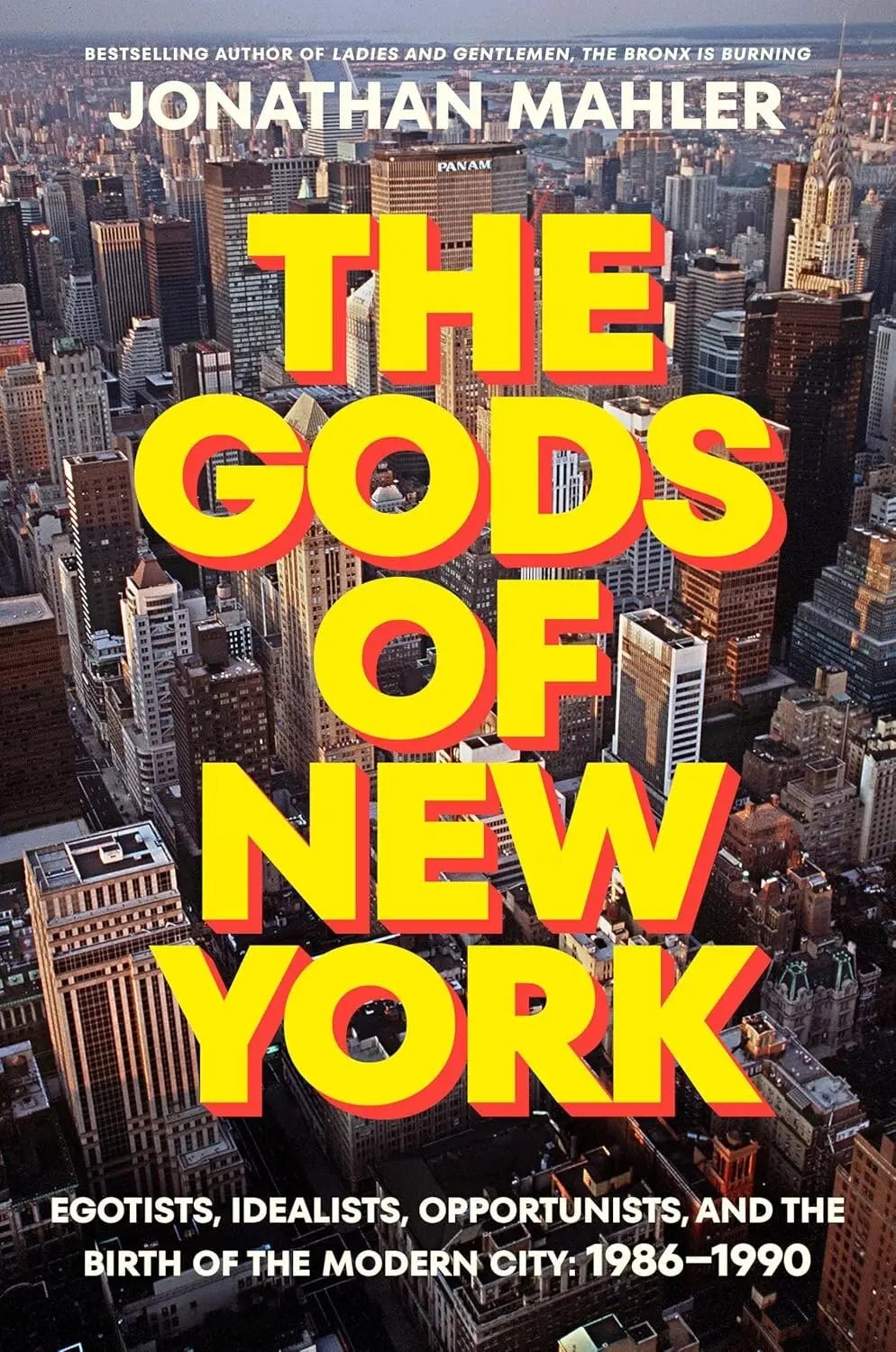
A second New York book I really enjoyed was Kevin Baker’s The New York Game: Baseball and the Rise of a New City.
As Ben Yagoda wrote in the Wall Street Journal:
Mr. Baker contends that baseball “is really an urban game. More precisely, it is ‘the New York game’ ” (as it was referred to back in the 1800s). “New York,” he writes, “is where its rules were perfected, and where we first kept score. New York was where the curveball was devised, and the bunt, and the stolen base, and where the home run came into its own.” New York also hosted the first interleague championship contest to be dubbed “the World Series” (in 1884).
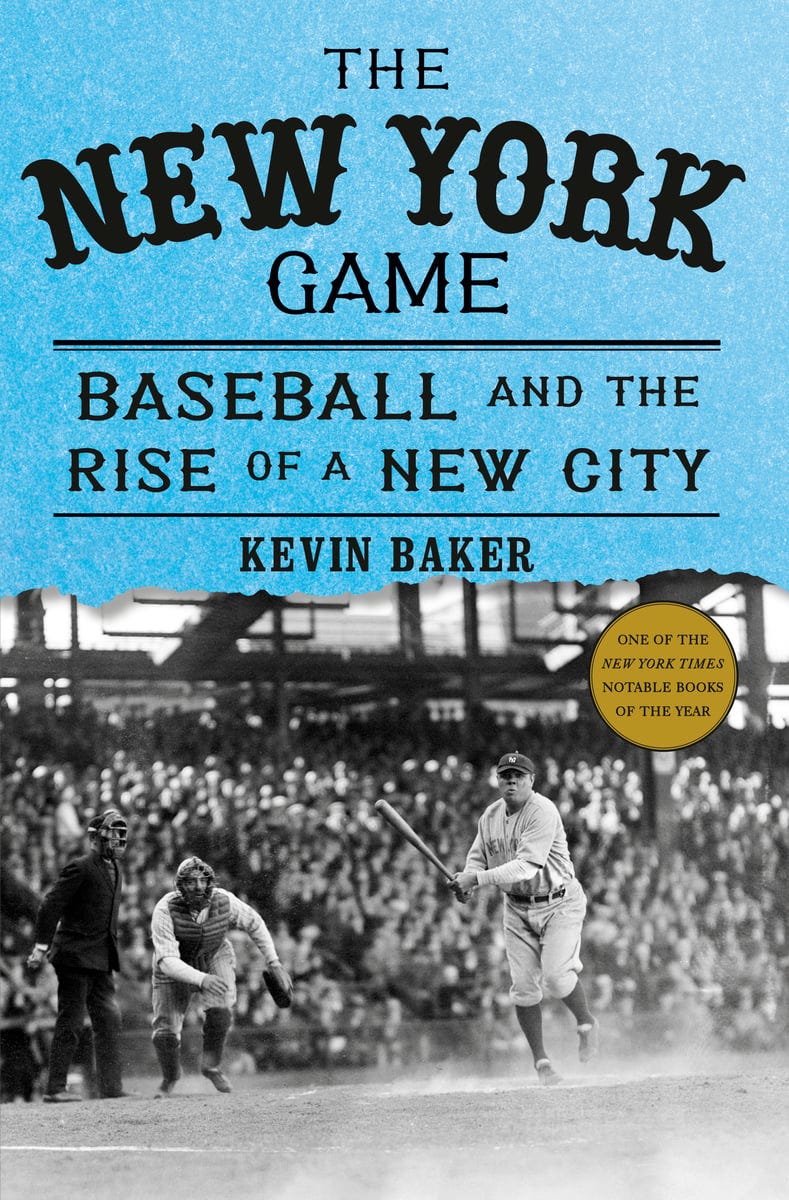
Forty-eight days until pitchers and catchers report …
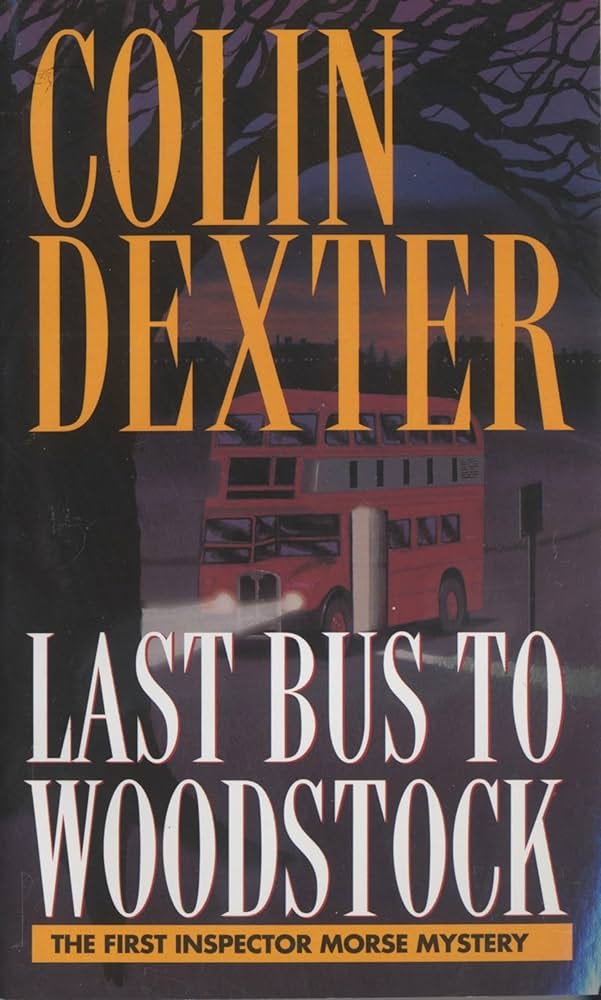
I loved the Inspector Morse series when it ran on PBS some years ago but until the last couple of months had never read the novels in the Morse series by Colin Dexter.
Now I’m hooked and reading them in order.
Dexter downplayed the success of his 13 novels about the quirky Chief Inspector as simply good fun, but when he died in 2017 Andrew Gulli, the editor of The Strand, a mystery magazine, told the Times that Dexter “was one of the greatest crime novelists of the 20th century and deserves to be ranked alongside Chandler, Christie and Doyle.”
The first Morse book Last Bus to Woodstock was published in 1975 and I was surprised - shocked - to learn that Morse didn’t drive a Mark II Jaguar as in the TV series, but a Lancia. He does, both in print and on the tube, like his pint of bitter and his Wagner, however.
These books are great fun, a lovely guilty pleasure.
“Authorized” biographies are often not worth a lot since, I think, authors tend to pull their punches in deference to the “authorized” subject. This is certainly not the case with Sam Tanenhaus’s book on William F. Buckley, Jr., one of the very best things I read in 2025.
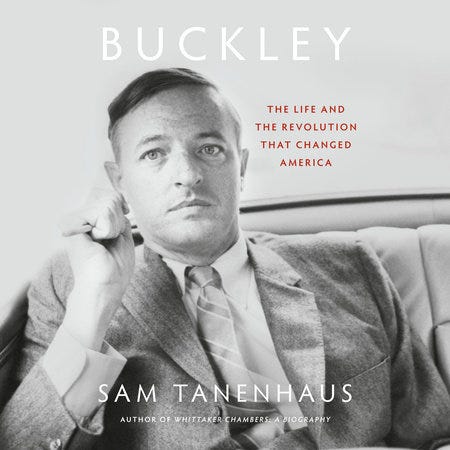
As the LA Review of Books said of this fascinating door stop of a book:
SAM TANENHAUS worked on his new authorized biography of William F. Buckley Jr. for almost 25 years. The result, Buckley: The Life and the Revolution That Changed America, bears every mark of a book intended to be definitive and enduring, not merely a sidelong commentary on a political issue of the moment.
You won’t be able to read Buckley without thinking about Trump. It’s not a stretch to say that Buckley, the intellectual godfather of the modern conservative movement, plowed the field for a character like the current president.
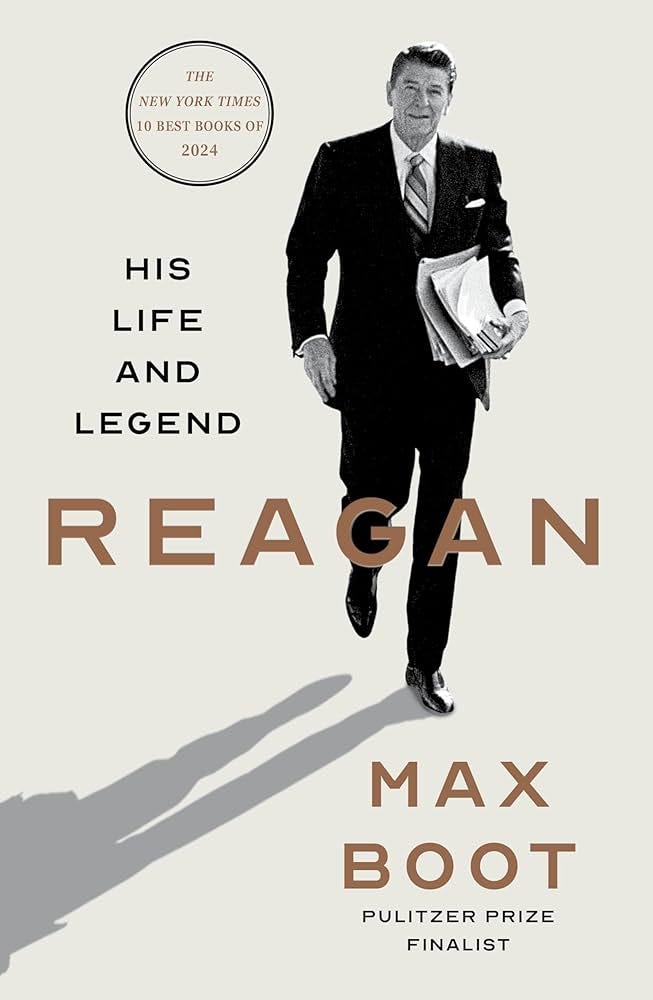
I also unreservedly recommend Max Boot’s definitive biography of Ronald Reagan, in many ways almost a companion piece to Tanenhaus’ Buckley.
The book is not a Reagan idolatry as many Reagan books have been, but eminently fair and judicious in its judgments of the man almost all conservatives loved until Donald Trump deposed him.
Of course, like all previous presidents Reagan looks better and better these days because Trump is so demonstrably awful and seems hell bent on destroying much of what Reagan championed - free trade, suspicion of Russia, support for long-time allies.
As The Guardian’s review noted:
Boot finds [Reagan] to be incapable of introspection, so emotionally withdrawn that he remained unknowable to everyone but his second wife Nancy, whom he called “Mommy”. While preaching “family values” Reagan neglected his offspring, and when his daughter complained he insisted: “We were happy, just look at the home movies,” relying on the camera to vouch for his parental affection. Although he was benevolent enough – as a teenage lifeguard at a lake in Illinois he saved 77 swimmers from drowning, and as governor of California he often sent personal cheques to citizens who wrote to him about their problems – Boot thinks that he had no real comprehension of other people. This limited his range as an actor; affable and superficial, in his Hollywood films he could only play versions of himself. It also explains what Boot regards as the most shaming failure of his presidency, which was his prudish refusal to confront the Aids epidemic.
Predictably many conservative commentators don’t like the book. A review in Commentary was especially dismissive to the point that I thought I was reading a different version of the book than the one being reviewed.
Trust me. Reagan: His Life and Legend is an outstanding political biography that like all good political biography helps explain the subject, but also puts Reagan in the larger context of our politics both before and after his eight years in the White House.
And finally, one more from history.
Michael Beschloss wrote his Presidents of War in 2018, but I only discovered the book recently. I’m glad I found it.
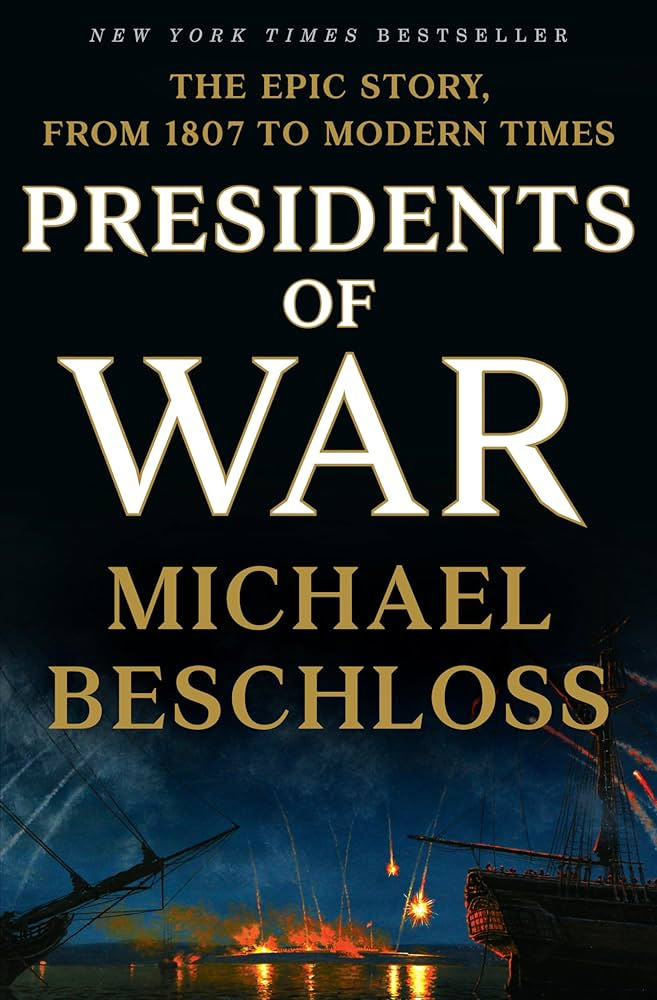
The book traces the actions of presidents from Thomas Jefferson to Richard Nixon who led the country - sometimes quite badly - during times of war. There is something new and fascinating on nearly every page.
We really do need to understand the Mexican War and how it set the stage for the coming national crisis.
Here’s historian Jay Winik in the Times:
Beschloss’s writing is clean and concise, and he admirably draws upon new documents. Some of the more titillating tidbits of the book are in the footnotes. Polk had urinary stones requiring removal, which left him “perhaps without sexual function.” Theodore Roosevelt regretted that he didn’t have a crisis dramatic enough “to fully demonstrate his leadership potential.” And Lincoln, of all people, may have contracted syphilis in the mid-1830s, which he then passed on to Mary.
The book also has some delicious asides, as when President Wilson met King George at Buckingham Palace; after Wilson departed, the king told an aide: “I could not bear him. An entirely cold academical professor — an odious man.” Wilson, Beschloss notes, for all his rhetoric about liberal democracy, seized authority as a war president with the “passion of an autocrat,” running roughshod over civil liberties. Moreover, he refused to deal with Congress as a constitutional equal. No wonder his League of Nations foundered.
Among many other take aways: Dolley Madison was pretty amazing.
So many books and so little time. Keep on reading.
Happy Christmas. And many thanks for reading here.
All the best.