
A Quote for Our Times
From James Madison, fourth president and father of the Constitution

It should be no surprise that we still have a lot to learn from the Founders of the American experience. Ken Burns has been reminding us of that, or perhaps making some of us aware for the first time.
So, a little Madison.
Little James Madison - he was only 5’4” - is not generally considered a great president, but he was a brilliant inventor of the American form of government. (By all accounts he also married well.)
Perhaps we can say Madison was a marvelous political theorist, a very good legislator in Congress and the Virginia legislature, but not a great executive. He was best in a committee and the guy could write.
(See The Federalist Papers, James Madison)
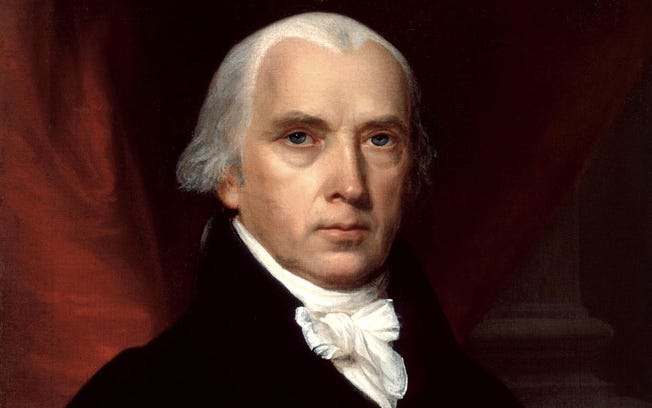
One of the many debates during consideration of the Constitution centered around - and this is perhaps a bit too simplified considering the level of intellectual discussion at the time - whether the power of the new government could best be entrusted to the “elites” - the “gentlemen” - of the 1780’s or whether, as Garry Wills has put it, “ordinary citizens can rise above narrow interest, trusting their delegates to make the best bargain for them, in conjunction with the just claims of others.”
In other words, could the people - voters - make wise decisions about representation and then trust that those representatives could arrive at wise compromise? It is still a good question.
Madison stood with the people, expecting them to exhibit virtue1 and behave as intelligent, wise stewards of their own government, while selecting their leaders with consideration and care:
I go on this great republican principle, that the people will have virtue and wisdom. Is there no virtue among us? If there be not, we are in a wretched situation. No theoretical check, no form of government, can render us secure. To suppose that any form of government will secure liberty or happiness without any virtue in the people is a chimerical idea. If there is sufficient virtue and intelligence in the community, it will be exercised in the selection of these men, so that we do not depend on their virtue, or put confidence in our rulers, but in the people who are to chose them.
I know I’m preaching to the choir, but that’s it. That’s what democracy is all about.
We must be good, wise, informed, engaged citizens, willing to put the common interest above self interest. It all begins and ends right there.
All the best.
Be careful out there. Happy New Year.
By “virtue” Madison and others of the Founding generation meant “putting the common good before one’s own interests.” Here is a good essay on the ideas of the Founders.
I know there is virtue among us, but we've also seen that there was not enough to prevent the selection of a leader willing to lie, steal, cheat, incite a mob, subvert our systems of accountability, and quite possible break our ability to select men and women who can repair the damage after his incapacity and removal. God bless Madison and the rest of the founders, the despotism of King George III did not prepare them for what we have now. (Apologies for noting the cigar in the punchbowl.)
I must have read Madison's key insight before, but had forgotten, even now when it is now more needed than ever. Many thanks for the reminder and best wishes for the New Year. Vanessa and I are entering it with higher hopes than we had a year ago.